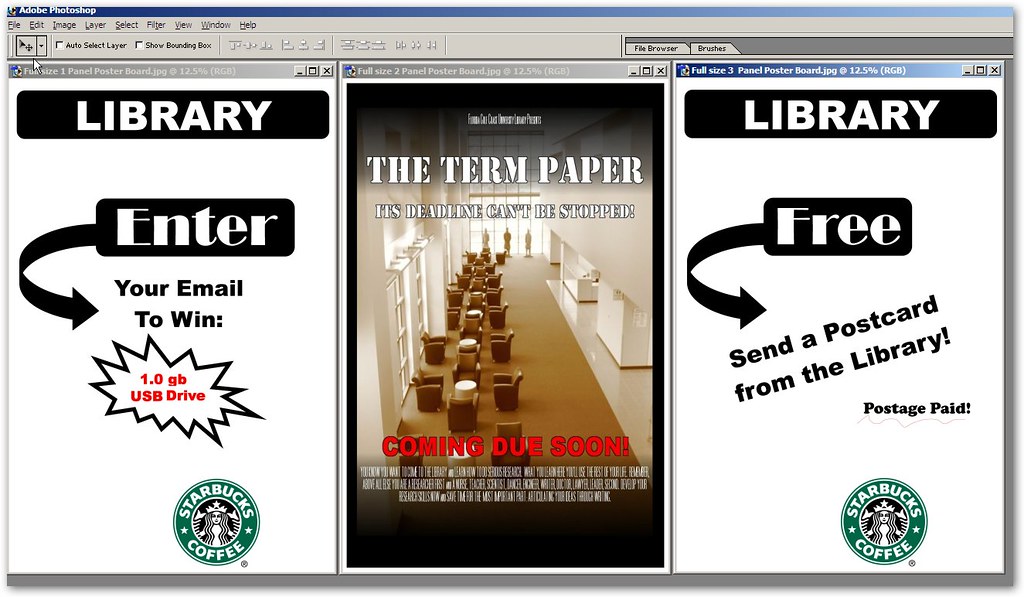
Part 2: So I made mistake on a poster for my library: why?
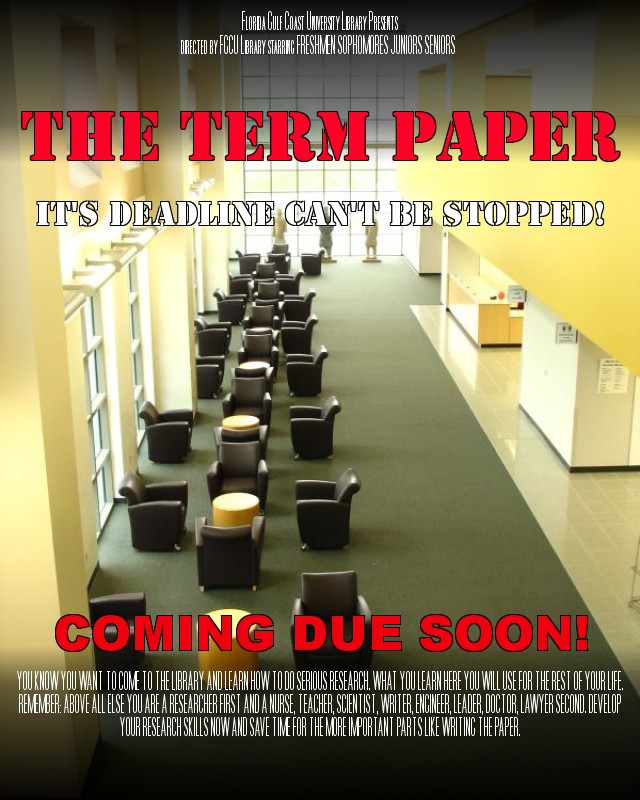
Its :P right on.
What's funny is that I had read this before I chose to start posting mistakes, warts, guffaws, errors, idiocies, bleeps, and all.
Rather than make sure my blog entries are perfect, pictures are perfect, code is perfect, grammar is perfect -I thought: why not just push to get more stuff out of my head and up on the web --share my thoughts --push my creative limits-- be less worried about getting it right and be more worried about getting it done.
"Below average" as a writer accurately describes my writing abilities. I only wrote my first paper (shudder when I call it that) in 1996. Yes, 1996. While 11 years have passed, consistent writing still escapes me. To feel I mastered what I should have learned from grade school & high school in the same time I'm supposed to be writing at the graduate level is a joke --on myself. I'm still learning some basics now.
While I write "for" the graduate level and do a pretty good job, most times it is an arduous struggle to produce a work I am proud of. I had not wrote a single paper in high school, did very little in depth writing in the military (mostly short, bulleted, tech reports.) In fact, the very first paper I wrote in college was, ...hold your breath... 3 pages! And I got a "C" on that paper.
Now it's years later and I realize I'm missing critical writing skills. But, I am slowly picking them up. Being years behind in the basics doesn't make it easy. Working hard to develop my writing I feel the thoughts/ideas in my head & the words I see don't even come close to articulating what I want to say. Then I make mistakes -oh that's just great.
Now you add the horror of people thinking you are less intelligent +your mistakes +lack of ability to articulate +desire to produce thought provoking quality writing +the fact that you don't know most people go through or have gone thru this process and it = performance anxiety, that is, until you face it. The research on reading & writing prove this true.
It's just funny that the week I push myself to experiment more, I get vociferous feedback, indirectly, on a minor mistake. (I shared it for comments to be sure.) Here I am trying: to publish more of my work, to grow professionally, to challenge myself by exposing more of my raw creative process. I post something and the first thing people do, while compliment it, is criticize it. Seems backhanded. I like being criticized; as long as I know it's coming. I'm not opposed to it at all and produce my best work, usually, only after someone totally shreds it.
When you think it's such a horrible error why not contact me directly like one poster on my flickr account did. I found that admirable. And indirect comments show that we have a tendency to do one thing first: find fault. I'm not crying over it. I'm not hurt or sad or remiss. Actually, it's emboldening. I'm quite distant from the happenings & only know about it indirectly.
What I am doing is using this as a writing exercise. There are a lot of reasons but this helps. Sorry if you can't handle a wide swatch of language but: don't stomp on me because you are living in fear. I gave that up a long time ago. I wish to bring civility back, because it's not about the cell phone. I would like to see courtesy, respect, and dialogue, not discussion, rise.
Any and all mistakes are my own.