Showing posts with label information_strategy. Show all posts

10.03.2007

What's new stuff to think about?

Stuff that came up for classes:

1. Classmate said libraries shouldn't try new things. Response by me:

" Libraries still matter and how they embrace change really matters. There is a whole host of research coming about the "library as place" as an "information commons" as a "social/cultural/civic/media center for community" as a "culture of participation" -it's an exciting time for libraries that realize the needs are many, the places few, and the reason to change (and change quickly) is to remain relevant. Many cities, counties, universities and colleges have closed the doors and gutted a part of their soul: the library, for libraries were seen as useless, dusty stacks taking up a square foot of space (any true administrator thinks in cost per square foot and how to maximize this.) Libraries must find new ways to add value. The one great thing about libraries is that they can change -while still meeting current needs."

only in a european library -maybe in NYPL
2. In Europe, they showcase the Devil's Bible. Here we ban books and consider a folk tale book obscene. Fortunately, they're are some sane people in the town who actually recommend reading banned books. Read some more thoughts on it.

closed
3. Leadership is about preventing things that should not happen. While it's a leap and I don't know all the facts and yes I'm getting into the game late but how is it that we do not have a network that any library or library system can tap into for emergency help?

Far-fetched? Let met tell about this place that gives you things for free allowing you to get rich and even when you return them, you're still richer. Crazy right? What kind of world are we living when we let a little piece of ourselves die quietly? Where's the net to catch the weak; where are the strong and passionate to rally round the fallen, where was I when the last book drop was locked?

WoS Scopus Google Scholar
4. Oh how I love to teach the lazy, the I don't care the too--busy researcher and the deeply thorough researcher about ways to mine citation data. I also like to learn myself about the accuracy and efficiency of WoS, Google Scholar, and Scopus.

Carr 2003 IT Doesn't Matter
5. IT don't matter! or does it for libraries? Next up, the greatest use libraries can make of technology is the strategic use of IT. Don't just buy more "Internet terminals" rather make technology your b....[deletes derogatory word]...most beneficial tool.

8.26.2007

Why could this post help you?

do not obstruct

Note: Thanks to a fantastic proofreader, my friend Marla, this blog is proofed!


Why could this post help you? Because you can tell me other things I need to remember to develop as we go back to school this fall.

You're in school as XXX student? How can you get out of school alive? Should you just hunker down and get it over with? How can you get out of school and get a j-o-b, or get some Work, or have a "career"? How will you matter? What are the things you need to think about as you go to school besides when your assignments are due? What are the skills you should develop? Where can you be most effective? How can you change the "thems, the theys, the those people" because you have the answers? What are you going to library school for: to usher in what's coming after 2.0 or to maintain the status quo? How can you be better, at changing?

Don't worry if I sound completely wrong. I most likely am in some way. I'd like to hear about it too.

On emotional intelligence: This will make some of you feel uncomfortable (and if it's any comfort this is coming from an "ENTP" -if classifications help you.) You're first guideline: Do not obstruct or obfuscate. Your technological skill set will matter little if you show a co-worker no compassion when they breakdown in front of you in absolute despair and sadness because they just lost someone they love. So what if
they're a co-worker you don't really know (which begs the question why we're not closer to the people we spend nearly all of our waking hours with...hmmmm, does "blank" keep you from expressing your humanity at work because it's feared to affect productivity? What would you do to comfort someone? Why even talk about emotions at work? If you haven't thought about the fact that we all face death and loss, that in the smallest of moments you can find the deepest well of humanity you will not be successful in bringing any change to the library world. The library world will make you feel the entire spectrum of human emotions. Let your emotions help you. We are not rational beings. We are a combination of rationality and extreme irrationality. This is fine. To be successful in your work/school/life you must deeply develop emotional intelligence. I'm not saying: become a sap. Yet, when was the last time you even had a conversation about your emotions, or feelings, or allowed yourself to ponder on thoughts about your emotions or anything about any nagging mental conditions that run like an endless-looping-script in your head? Can technological skills be learned much more quickly than you can learn to change ingrained, reactionary, feeling-based responses? Take the long way out. Leave the quick-witted path. Coddle anger like you would rock a newborn baby to sleep (because anger's really just a big, big baby who needs a nap.) Find the middle ground between technology and humanity.
Try this: for the next week give up all spontaneous reactions to someone cutting you off while driving, a colleague interrupting you, a patron telling you they know you have that book with the thing about the man who knew too much, etc...note how hard it is to not react negatively to comments, posts, or pictures, or experiences that do not fit how you think things should go. And read "The No-Asshole Rule" by Sutton.

For your in
-class sessions: develop a consensus-building methodology rather a militaristic posturing of fortifying your own opinions. Lively, engaged dialogs I have no problem with. Class discussions are not about advancing your best arguments as you would to win on some battlefield. Instead of advancing your own opinions in class seek out an opinion you must take time to assimilate as your own. Then, in doing so you will learn a few key things about yourself while developing the ability to view ideas from another student's perspective. Years from now when you are sitting in a meeting and someone is putting forth an absolute insane idea, you may be able to find some merit in it. Or you may be able to gracefully help them see the error in it. The goal of seeing into your own preferences, beliefs, attitudes, or mental habits should be quite exhilarating -yet I bet you sense resistance in your own mind as you read this. Why is that? I do too. Hmmm, maybe it's bullshit. Maybe I need to try harder.
Try this: Pick a person to understand and work to explore their view point. If you wish to be so bold, take on a view that is diametrically opposed to yours. Adopt it as your own and work on gaining an insight that causes "ah-ha!" Then, tell me how you did it.

Seek out mentors: I (thankfully) have several. Some are informal and I call/email/im irregularly. Or have one you meet on a weekly basis and just talk about life and what-ifs. One of the biggest things you can do with your mentors is "thought experiments." Mentors most likely have traits or skills or life experiences you have not had yet. Therefore draw on them.
Try this: often I get frustrated in meetings when there is no process; often those meetings are just a crazy melee. Hashing this out with one of my
mentors I developed a strategy: abandon all outcomes while maintaining hope. Good luck! ...as I don't have that one figured out at all. I just know how to notice the rising feeling of frustration now. When that feeling passes, I can cultivate some pretty cool ideas. Usually they're still hot as potatoes outta the microwave which I end up lobbing at my friends but hey, I am definitely imperfect.

Think: how would I teach this? Michael Stephens, Roy Tennant, Jessamyn West (and others I've discovered through blogging like Penelope Trunk) so distinctly embody what I consider master-students/teachers that sometimes you don't even realize how much and how often you're learning when you're talking with them or just reading something they wrote or meandering down their flickr streams. So, why does someone else think they are right? What is the middle ground I can reach? How can I bridge this information into a discipline that no one else is thinking about? I once found a cartoon about mine workers in South Africa and used it to articulate the point of being clear in how you disseminate information (via a wonderful explanation from Buckminster Fuller.) We need more library minds who want to be bridge builders, who want to smash open the OPAC, who want to Forgive Fines, who want to deliver the world of information to the world it's actually a part of. To do this, become a teacher first, researcher second, and librarian third.

Consider yourself a reader who is a leader: Read. A lot. Mostly about leadership but be very skeptical of trends, management-ish, cutie-tootie-happy-bunny-pony-titles. Take a bite o' time to assimilate. Chew thoroughly but don't eat so slow you starve. Have a process. In the book "Love is the killer App", Tim Sanders outlines how to virally spread your knowledge & gives some pretty sweet techniques for getting more out of your reading. Consider it like this, when you teach you're kinda hacking your own learning centers forging new connections thereby accelerating everyone’s ability to learn. The plasticity of our brains is so far greater than our ability to deny what we can't learn. Also, find someone who you think exemplifies leadership and find out what they studied. In "Leading quietly" Badaracco's examples are so clearly articulated you'd have to try NOT to learn from them.

While we're talking about learning: learn to pause while you're moving. I mean that (kinda) metaphorically. Moments strung together like so many disjointed vignettes are all we have. Many people far smarter than me consistently point this out. Schon's "The Reflective Practitioner" delivers a good treatise on this. Flow" by Csikszentmihalyi (Chick-sent-me-high) helps to you to see this in every activity. Hannaford's "Smart Moves: why all learning is not in your head" presents powerful ways to up-your-engagement as you learn. "Living in Balance" by Levey and Levey bursts with methods to put into action the idea of balance -which is what learning is all about. Taking Aikido wouldn't hurt either. Or Ashtanga. Or having a dog.

Become an auto-didactic: if you're not already, you need to be. This is your primus inter pares requirement for entry in the library/information professions. You should be on the bleeding edge, the event horizon, the rising tide, the perfectly tensioned state of always looking for opportunities to be learning. Have you seen The Last Mimzy? I did. [sniff sniff]

On advice and mistakes: I don't know much. I screw more things up than I fix them. I break a lot of things. I probably take too many risks. I'm not routine enough and need to proofread better. I respond too quickly. My aim lies for a shot down the middle and I'm the guy that ends of beaming someone in parking lot with a stray golf ball. But, I'm getting more and more comfortable with sticking my neck out and school is really the best place for it. Now, it may be to extreme for you to get an F because you wanted to do a project your way and really wanted to see if you professor was serious about accepting an original solution. It wasn't for me. I'm not paying lip service to taking risks. I've got a scatter shot of grades to prove I'm wiling to take risks and that this ain't just talk in case you’re wondering how far I'm willing to stick my neck out. (I would obviously prefer not to get Fs and I'm not suggesting you do it, nor am I bragging about getting bad grades because I think I'm soooooo cool.)

Develop discipline: you no doubt already have it. Take working out to start with. Most people say they don't have time to work out in school. Yet, you have time for all kinds of other habits right? Well, the first step of successful discipline is finding time. The second step is making time (which may be the first step?) The third step is using that time. The fourth step's letting nothing take that time away. The fifth step is repetition. The sixth is picking the right kind of workout. Are you training to relieve stress or compete in the Olympics? Devise the right program and you will find that you have resolute discipline. Training your body isn't about training your body, it's about training your mind. All the extreme religious ascetic practices use the body to train the mind. I don't agree on going to the extreme by the way. Sometimes though, when you start, a 100-mile run seems extreme. Once you realize that you're de-hardening habits and working to create a supple mind/body, then it's easy. Just joking. It's still work but at least you get the connection. Supple's better.

Working towards getting a j-o-b: if you're not already working in a library or some information-related profession you need to be. The people and blogs who tell you to not enter the library profession because there are no jobs are viciously blind, sadly misguided, disgruntled only because they have not continued to look for and may lack the skills to get a job. I'm not talking about the actual degree. There are other more intangible things you must build up within yourself. Yet, if you already are not working on your resume, your interview skills, an area of expertise, not blogging (or some activity that makes you process), not attending job fairs, not networking, not developing your career like any other passionate interest you have: then you will have very hard time finding a job let alone work you love. Yes, you should love your work because outside of sleeping it's the activity you are going to do for a very very very very very very long time. Accept this notion until you win the lottery at least. You also should have no compromises about the work you want to do. Getting a masters degree then working at, ohhhhh I don't know, a convenience store means you're not thinking about your choices long enough. Believe me: when someone is flinging verbal pooh at you in a restaurant, and you know you deserve better, it's one of the most disheartening feelings you can have at the end of 13-hour day. Don't get stuck being frustrated by your job like I did. Be far more awake than I was/I am as you go to school.

Remember, above all else: please, please, please come into this profession as a leader. Yes, embrace technology. Embrace change. Bring more of yourself to work while giving other people more space to be themselves at work. Embrace new ideas and create a sandbox for people to play in. Use language that includes people. Say yes first. Offer help first. Ask why not first. Help ideas succeed first. Let things happen even if you don't believe in them. How do you know what to believe in? Don't look to me to tell you that (like you were anyway?) Libraries and librarians no longer are a place of refuge from the world. You can't hide out in libraries as the world gets crazier. We need more "radical" libraries and librarians. We need less people getting out of the box and more people getting back into the right box. Read "Get Back in the Box" by Rushkoff. Libraries may well appear to be the calm center in this hurricane age of change. But, how do you know it's not really a tsunami and you're sitting on the shore -facing the wrong direction about to get slammed? Better to paddle out and ride in with the waves. We need leaders, like you
, who will do nothing short of working to re-ignite the sleeping masses that rely on you so much. You may have to re-invent yourself along with the world of libraries to do this utterly hopeless, lifelong, and thankless task. Ready to go back to school now?


7.20.2007

What are the 3 changes that can be made right now?

the 14 year old shirt

1. Free Willy: make reference useful in the age of Wikipedia
  • Reduce reference collection by 90%
  • Create new "Reading" reference area much like the way periodicals are displayed
  • Peel back the layers of inaccessibility that exist in the Reference section

2. Kramer vs Kramer: down with one broken cataloging system
  • Keep our systems of organization separate from how users/patrons/customers browse for books
  • Entire library should be infinitely, serendipitously browse-able while giving exact locations for items that don't confuse users
  • This means a back end for the cataloging/categorizing freaks & a front for the findability & learnability freaks like me

3. Face-Off: turn the library into the sum of its parts
  • Create spaces for freelancing workers, small business owners to hold bi-weekly meetings
  • Offer early opening hours to Rotary groups & other social orgs even Girl Scout cookie sales
  • Encourage local government & businesses to hold networking functions at library

7.15.2007

What skills to teach researchers?

Gmail as document database

The idea:

Use RefWorks to manage citations & gmail as web database to collect research documents (articles, images, scanned pages from books, etc...).

The system can do this because we separate the documents from their descriptive identifiers:
--gmail to contain pdfs, and
--Refworks to hold citations.

Goals:
-- augment, unify, improvise new elements,
-- and adapt the best ideas in each design,
-- share, share, share: the golden days of the lone researcher are done -if they ever truly existed.

The major problem with current systems:
-- the continuing explosion of research, worldwide,
-- inconsistency in design and execution,
-- the different "export" formats for data with no standardized xml-like structure, (even if they say they do, it's rare to not have to clean up your data),
-- and lack of centralized storage mediums for collected documents in any format,
-- very few user advocates.

RefWorks 1

A Proposal for a Distributed Citation Management Information System: CMIS:
That's just some fancy name/acronym that uses web resources to make aggregated citations & digitized documents available anywhere & shareable. Here we look at the information system in terms of its usage, intended audience and features. The information system described below capitalizes on currently existing designs and technologies in information systems. I've not come up with anything new here: just re-mixed some ideas already out there. I know some systems offer this service, kinda.


Specific Process:

1.1 Our intrepid researcher conducts a search in a full-text-database or on the internet.

1.2 As the researcher finds citations & collects the full-text documents, those items could be stored remotely.

1.1a. The researcher could upload this file into a web-based storage medium. This web-based storage medium could serve triple duty

-- as a repository for the files,

-- as a means to back up files as we all face the potential of local, catastrophic data loss,

-- as a means to keep accessible/feed the collected citations and documents -think rss.

1.3 The researcher chooses RefWorks to manage the citations as it’s web-based & allows for semi-clean exporting.

1.3a. The researcher opens a gmail account with the name: Smith.documents@gmail.com

1.4 Next, the researcher renames the full-text pdf with this specific naming convention:

--"Last Name of Author Year.pdf" and uploads to gmail

1.4a. A researcher collecting thousands of articles, naming files arbitrarily or using the article title or using keywords and having to remember what they signify fails at a large a scale of documents.

1.4b. Adhering to a strict format encourages a consistent file naming structure and the use of a search engine to find the articles in a time of need. Browsing through nested folders on a personal computer could be likened to “filunacy” not to mention abysmally time wasting. Having to remember why you titled a file "Information Management" when it is about Florida Citrus in the 1930's may not make sense. Yet, if you use an information strategy combined with a search document repository where you properly cited and included metadata you might find that in an article from the 1903’s on citrus a quote that caught your attention and succinctly expressed how all the world is information -even in the eyes of a citrus farmer.

RefWorks 2

These two elements combined create a (web-based) citation manager and (web-based) document repository. Removing the need for storage on a personal computer
-- frees one to gain access to research anywhere in world,
-- allows anyone to share their research by encouraging soft collaboration.
Soft collaboration could mean an RSS feed to stream new research back into the library's OPAC or databases. This means a researcher could choose to be shown research other collected citation "containers" from fellow researchers via a feedback into a database.

The containers may have research citations of interest to anyone collecting similar research. Potentially another researcher could have already spent hours collecting documents on say, "Design of Information Systems." Seeing those citation containers collected along with a scholar's ongoing search will address the questions Tague-Suttcliffe and Saracevic put forth about interactivity retrieval and the need to not ignore this integration into search.

What this allows is a highly scalable design of simplicity, usability and the most important "small, low rules for learnability." Students will learn:
-- research is cumulative,
-- can be re-cycled, and
-- planning out research saves time at the end.

at work on the document idea

As OPACS and other online search systems become "smart" to
--allow users to contribute,
--make data portable across systems,
--and expose empty, disjointed spaces rather than disallow actions
the integration with much larger information systems (think web of interconnected citations) presently in existence or to be created in the future will increase collaboration. While the parts are not highly integrated into one web-based platform, we do have portability and opt-out abilities in some systems. A universal citation format for all disciplines/ document types wouldn't hurt either.

Design and usage:
Several citation collection systems exist. Most of the current systems have one component of what is addressed below. As an example, current citation management systems will keep citations organized but not the documents they describe. This is not to mention another issue where the researcher gets little help in the pragmatics:
--naming files,
--creating folders
--or instruction the best way to organize the collected documents.
If these current systems capitalized on the research of information organization perhaps the realization of aiding the researcher or defaulting to a "safe mode" would be transparent. Actual, practical aid to researchers on these matters is slim.

Current systems:
-- are either web accessible from any computer
-- or only accessible from a single desktop computer, and are
-- rarely both.
This is of no aid to researchers who wish to share their knowledge. The personal citation systems typically link to the articles stored locally on a personal computer and do not have a universal, off-site repository for the documents they describe. Buckland describes a document as something that will constantly evolve AND of which new forms may be introduced AND most importantly can serve as a sign to relate meaning. Usually though we find a document having a dual nature depending on its context (Buckland, 1997). The Shibboleth project & a central repository for uploading documents would go very, very far in aiding research. The OCLC is working on something like this for ILL.

This dude Saracevic's idea of context and the need for information scientists to get on the same page if not within the same document space rings true: gonnnnnnnnnnnnnnng. Saracevic asks, "How successful was and is information retrieval in resolving the problem of information explosion in the area applied (Saracevic, 1995)?” The research documents I'm choosing to discuss here are pdfs file formats. The collection system proposed can hold any media, in any form, for collection, storage, and retrieval. Currently, the only limit may be the size of the file. Some materials may need to be converted to a suitable electronic format for storage and delivery.

Since all the pieces already exist what the researcher is looking at is a method of organization, representation, retrieval and relevance that is highly achievable. Being part of larger organization systems much of the information infrastructure lies in place. To further extend this idea the current export links in any type of database could be massaged to externally or internally launch a container to capture the scholar's research importing or interfacing with either desktop software or web-based accounts. At first the researcher has to learn to use the different elements.

Future iterations of this information design will see the integration of these steps into the search process. Another point is that once learned these elements free a researcher to devise their own citation system or use existing systems. Making searching, collecting, and organizing operate like a well-greased wheel will only create an easier research process for all types and levels of scholarship.

Intended audience:
Our intended audience for this scheme of information organization and representation are first year college students just entering the world of research. The idea is to break research into two steps: search and collection management. The initial step is for our first year college students to search for sources of information. Then those students are to manage the collected sources of research to make it immediately valuable by organizing the information and making it accessible. Doing so helps develop core research skills needed for in depth research projects such as the ability to manage large pieces of information over an extended period of time.

Primarily, this information organization and system can be used for any age college student within their first year of college. The immediate focus is freshman, first year, or first time in college students. Our intended age range could be the typical eighteen year old traditional freshman or fifty year old non-traditional student. The best results and sustained use will come from marketing towards and for first year students as they are unlikely to have any information management skills. Centering on this strategy encourages and allows student to learn proper sequence for research and teaches students to break research into steps. In time, research on the CMIS would show it fosters a larger, or systems-orientated view of information management.

Although this discussion was tapered to blending with existing information systems, information professionals could use closed, pay-for-access services, free software, open source software, web-based software and or a combination these methods in designing an information system and teaching researchers to manage information. Actions like these create knowledge of the larger world of scholarship, steps that go into research, and helps create fluency across mediums rather literacy with one medium or type of tool -think here of a for-purchase piece of software such as Endnote. These techniques can be formalized into a software system and becomes another tool student’s use regularly; students grow their research sources and begin to understand the need to manage their information life as they go through college and into their professional career. Integrating current information systems this way or creating an information system that helps complete research steps put the research process as part of writing process as part of information management. This strategy starts students early with information management and places the library, the internet, software other university systems, or an information commons as tools students use to conduct research.

Intended features:
This CMIS information system is designed to integrate with a library web site, a university web site and an email web site. The features include benefits such as portability of various pieces of information. Citation containers can appear along side other research results. Clickability is maximized as researchers’ doubts are minimized. Those doubts can be framed as "Others conducting searches on your keywords collected these citations" links.

Citations, papers, and other research sources can be shared through this method as it encourages dynamic use of research. Students can more easily access and share with their research with fellow students at the same time seeing what others search for. In using the existing OPAC, databases and it is necessary only to add a third component: information management of research sources. Those components which we discussed consist of an email account that serves as a document repository, a citation manager software piece and the learnable strategy to use these components to mange citation and documentation. Each piece could be embedded as links within the databases.

Gmail as document database

Clicking on a link could serve to launch an external connection to the established web-based accounts via a proxy server. Seamlessly transitioning the data would be the goal but in cases where this could not be achieved it would desirable to have the data exportable in a standard plain text format, xml format, bibtex format, tab delimited format, or ris format. Having this variety would ensure compatibility across several information systems, allow for retrieval, and sharply increase the chance that, in the present or future sense, the citation and documentation will only gain relevance.

Design and usage are intermixed and linked. Having software either web-based or desktop based to aid researchers citation and documentation management making research-sense. Tailoring to an audience of first year college students by use of features, technology, and portability means capturing a group to increase the relevancy of the aid information professionals can give to future researchers. The information system described above can capitalizes on currently existing designs and technologies in information systems while anticipating new and emerging methods of scholarship citation and documentation management.

The goal is to increase the successful retrieval of information(Tague-Sutcliffe, 1996). If the final aim lies in augmenting, unifying, and adapting the best ideas in emerging information systems, this method can be packaged to that end. Highly simplistic, eminently usable and learnable, the integration with much larger information systems presently in existence or to be created in the future only makes sense. Future researchers will expect to be aided in their quest to manage their information.

References

Buckland 1997.pdf
What is a “document"? Journal of the American Society for Information Science, 48, 9, 804-809.
Saracevic 1995.pdf
Evaluation of evaluation in information retrieval. Proceedings of the 18th Annual International ACM SIGIR Conference on Research and Development in Information Retrieval, 138-146.
Tague-Sutcliffe 1996.pdf
Some perspectives on the evaluation of information retrieval systems. Journal of the American Society for Information Science, 47, 1, 1-3.

7.12.2007

What is next for the social library?

do-more,-do-less lee.

1. Advance your own agenda less, help a coworker bring out the best ideas they have, more.
2. Embrace the "No Asshole" rule. That's not meant to be vulgar.
3. Learn what is the killer app: love.
4. Mastery & beginner's mind will save you every time: Learn, Learn, Learn & Learn.
5. There are no meaningless conversations. Yes, some cell phone conversations would be better relegated to cell phone booths.
6. Build socialness into your entire virtual/physical structures & expose the seams to let your users know you know what doesn't work: think transparency 2.0. (This point is a little ahead of its time.)
7. Share, combine, focus the efforts of our library world. We are not alone in needing to reduce expenses, raise funding, minimize mistakes, and capitalize on our collective intelligence.

7.08.2007

Whats your guarantee?


Whats your guarantee
Originally uploaded by iblee....

Is it more complicated than rocket science?

How do you make Undergraduate Research Part Of The Learning Experience?


everything will be ok
Originally uploaded by iblee....


Via The Kept-Up Academic Librarian by steven bell on Jul 02, 2007

Another thing we can do is rather than let those papers & presentations go to waste hold a library competition for the best use of library resources. Too bad more libraries don't do this.

7.04.2007

What works now in Library Land?

NOTE: That wasn't the cleanest upload by slideshare -really changed the layout and fonts.


6.28.2007

What do I do when I need help?

Tampa Fl

Turn on the p2.0wer. Yes, that was corny.

I need your help. I've been looking but I need to find more ways to help my friend:

  • journals that would publish radical critiques of community-based writing & publishing groups

"...I'm looking to publish my work on Shepard Fairey and Obey Giant, as well as some of my thesis research on community-based writing and publishing groups. These are two very different topics that would go in very different types of journals.
The former would probably be cultural studies- type journals and the latter would probably be appropriate for composition journals or any journal interested non-academic forms of writing instruction.
The thesis stuff also would be appropriate for journals focusing on community-building efforts in movements for social change and justice...
"

You are helping me help a friend who is a brilliant woman.

reach me: leblanc.lee[at]gmail

6.26.2007

What is good "information" career advice?

Sloppy Bokken Kata-12

This: not so much; while there is some good stuff to be found within the posts the perspective is skewed.

1. Before you got to "library school" accept that libraries are part of the world of data, information, & knowledge. By the time you get out of school, there could be an entirely new ubiquitous field of information wrangling -could you be the one to figure it out? If you only think of working in a library, then probably not. But, maybe you're going to library school to re-invent libraries because you love them -cool. That's information change.

Opening yourself up to interesting, intriguing, and other "library-type" jobs just may help you view the world from a perspective that gets you a j-o-b -unless you want something more. That's information inspiration. Don't just pay lip service to the work of finding work. People work hard at creating & crafting their careers . It doesn't hurt to be on listservs or to have wise librarian mentors. I owe my greatest work/career fortunes to mentoring librarians. Without their years of experience & guidance, I would not be writing these words.

2. quaere: ask. Ask stupid questions.
Ask questions all the time. Ask why it's important. Ask for whatever to be explained. Ask in a way that makes people open up to you & build upon your ideas. Ask someone to give you the alternative view of the idea they just put forth -because if they say your question is stupid, then they are not listening. Ask why people are think they are above answering basic questions like where the restrooms are. Ask
why not. Above all else: never let anyone intimidate you into not asking your question and never let anyone convince you you're stupid because your thought process works completely different from theirs. That's information strategy.

Most people use a
decision-making process that factors 1, and at most 2 variables, as they quickly move past any question you put forth. Additionally, there are hidden traps in decision-making. You can learn to make better decisions & asking questions (whether someone else artificially determines that your question holds a depth of stupidity is irrelevant to you) begins the process . Law enforcement individuals would tell you asking questions of all types is at the heart of learning about anything & that any question matters. Maybe it's not that there are dumb questions, but maybe there better people to address such questions. quid bovi.

I remember once solving a problem as Airman Basic in the USAF by asking what happened if this little piece of metal fell off. "Nothing" was the answer and it ended up saving thousands of dollars and tremendous labor hours. Oh, to change the part that lost a tiny piece of metal gearing required large sections of a turbofan engine to be removed to get at it: in the military, time is money and often lives. All because I asked a stupid question about a piece of metal falling off.


3. Read about new ways to work.
Surround yourself with people who rely fascinating ideas to you. That's information compression.
Michael & Jenny make you consider ideas in ways you wouldn't normally and ask you continually to apply those ideas to your work/life. Ben and Penelope talk about work as if it's part of your life. Imagine seeing work as something that was removed from your "life." Generations before us used to live this way. Now, how can you possibly separate 40-60-80 hours of your life out & believe your job doesn't affect who you are? Welcome to our time. Your job/work/occupation/ affects who you are; should it define you -maybe, maybe not? But, the old whimsical line about being on your death bed and wishing you hadn't spent more time in the office: is a trifling point that does not matter. Your final act as you die should be to look back upon your life and enjoy it a second time. Work & all.

4. And as the super-smart Rachel says: network.

Why is it time for a renaissance?


We live in the time of a great renaissance. And, this slideshare thing is a great way to share your presentations. Sweeeeet.

6.24.2007

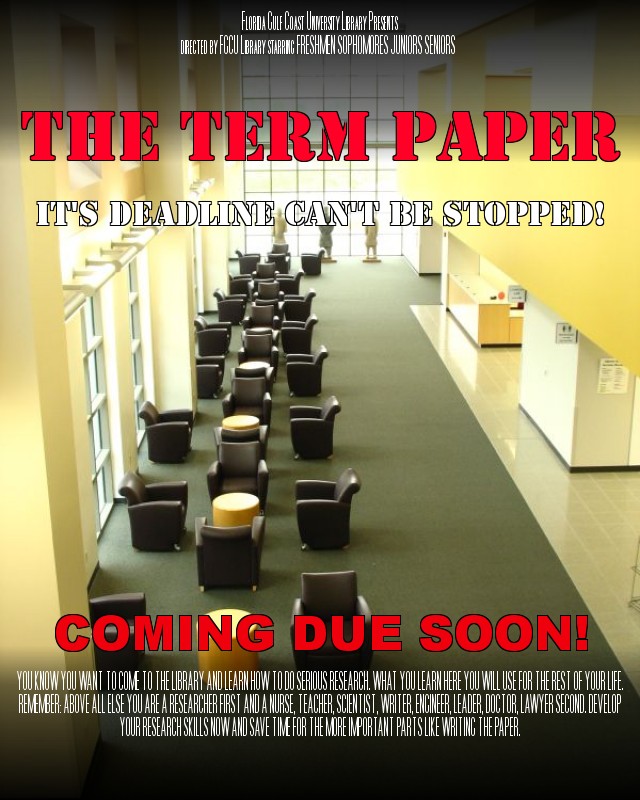
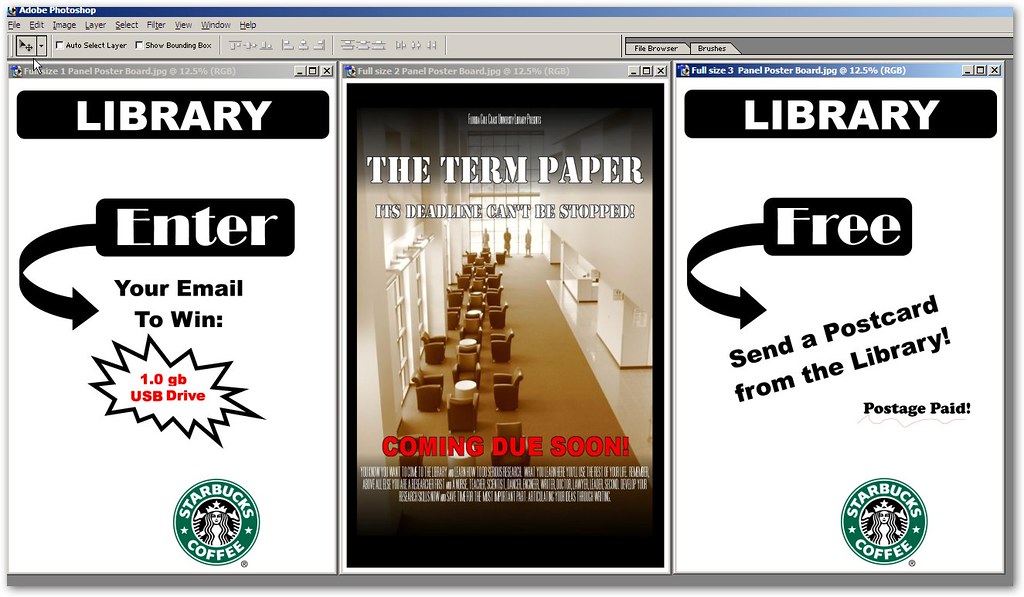
Part 2: So I made mistake on a poster for my library: why?


Its :P right on.

What's funny is that I had read this before I chose to start posting mistakes, warts, guffaws, errors, idiocies, bleeps, and all.

Rather than make sure my blog entries are perfect, pictures are perfect, code is perfect, grammar is perfect -I thought: why not just push to get more stuff out of my head and up on the web --share my thoughts --push my creative limits-- be less worried about getting it right and be more worried about getting it done.

"Below average" as a writer accurately describes my writing abilities. I only wrote my first paper (shudder when I call it that) in 1996. Yes, 1996. While 11 years have passed, consistent writing still escapes me. To feel I mastered what I should have learned from grade school & high school in the same time I'm supposed to be writing at the graduate level is a joke --on myself. I'm still learning some basics now.

While I write "for" the graduate level and do a pretty good job, most times it is an arduous struggle to produce a work I am proud of. I had not wrote a single paper in high school, did very little in depth writing in the military (mostly short, bulleted, tech reports.) In fact, the very first paper I wrote in college was, ...hold your breath... 3 pages! And I got a "C" on that paper.

Now it's years later and I realize I'm missing critical writing skills. But, I am slowly picking them up. Being years behind in the basics doesn't make it easy. Working hard to develop my writing I feel the thoughts/ideas in my head & the words I see don't even come close to articulating what I want to say. Then I make mistakes -oh that's just great.

Now you add the horror of people thinking you are less intelligent +your mistakes +lack of ability to articulate +desire to produce thought provoking quality writing +the fact that you don't know most people go through or have gone thru this process and it = performance anxiety, that is, until you face it. The research on reading & writing prove this true.


It's just funny that the week I push myself to experiment more, I get vociferous feedback, indirectly, on a minor mistake. (I shared it for comments to be sure.) Here I am trying: to publish more of my work, to grow professionally, to challenge myself by exposing more of my raw creative process. I post something and the first thing people do, while compliment it, is criticize it. Seems backhanded. I like being criticized; as long as I know it's coming. I'm not opposed to it at all and produce my best work, usually, only after someone totally shreds it.

When you think it's such a horrible error why not contact me directly like one poster on my flickr account did. I found that admirable. And indirect comments show that we have a tendency to do one thing first: find fault. I'm not crying over it. I'm not hurt or sad or remiss. Actually, it's emboldening. I'm quite distant from the happenings & only know about it indirectly.

What I am doing is using this as a writing exercise. There are a lot of reasons
but this helps. Sorry if you can't handle a wide swatch of language but: don't stomp on me because you are living in fear. I gave that up a long time ago. I wish to bring civility back, because it's not about the cell phone. I would like to see courtesy, respect, and dialogue, not discussion, rise.

Any and all mistakes are my own.

6.23.2007

What makes an e-book work?


1. Unlimited, concurrent electronic editions -but most vendors limit the number of users or the number of connections simultaneously

2. Most e-books are not important to users unless they are as easy to navigate as Amazon.com or O'reilly

3. What are electronic monographs and why do we insist on creating an air of superiority over our users by using words they don't know, don't care about and shouldn't have to be faced with?

4. e-Book and e-journal transactions (again why can't we say what people are really looking for... like articles and books) are about obtaining a piece of information from those document formats. Therefore they should be taggable, snaggable, citation-enabled/enhanced, hyperlinked, cross-ref'd, and full-text searchable and semantically categorized


5. Library users will discover e-Books through search engines. This is a fact. I've watched people actually type "your library's name and the name of the book they are looking for" -into a search box, in a search engine to find a book they need --or an article!

Why is it so hard for librarians to empathize? I'm starting to deeply comprehend why all the great masters are right ;) ...

6.21.2007

Say again?


Nicely said Meredith:

"... The beauty of open source software is not just the cost savings, but that anyone can improve upon the product. Someone at another library may see the same flaws in Koha that you do ... Instead of depending on a faceless company for development, you can benefit from the ingenuity of the community; a community that has the same interests you do in seeing the system be better...."

6.18.2007

Who's keeping track?


(3) LoC Blog thoughts (3)
Originally uploaded by iblee....

Nice to know someone's keeping track of all this new information.

6.13.2007

Is Wikipedia good enough?


can this be for real-1
Originally uploaded by iblee....

Recognizing that Wikipedia is "good enough" for the average user/patron/person/student/doctor/etc, stands as the most important point so-called information experts fail to accept. What!? How can we change this? We can't.

Why be so harsh on information experts?
i. Telling people you "know" what information holds the most truth is arrogant -and nearly impossible. While at times information can be verified, a solid open course of teaching information evaluation is better.

ii. We presume to tell people we know better than they do. Rather, we have just a few more years of driving on the open road that teaches us to be more cautious if even some of us learn that. We should teach healthy skepticism, coach, mentor, guide, lead when needed, . We should say: perhaps, consider other sources, look deeper, maybe, go further, don't take at face value, evaluate the legitimacy of everything, above all don't consume information like you're at McDonald's.

iii. Our new role is found working with people as the whole is smarter than the parts.

"How long long have you been driving? Are you an expert just because you've been driving a long time?"

What do most people do with information?
A. Most people don't evaluate information on the quality of the resource.
B. Most people evaluate information on its 1) usefulness to their immediate need in answering a question, 2) their desire to pursue their question further, 3) a decision-making framework based on prior knowledge, experience, and information.
C. Most people would listen to us if we first listened to them.
D. Really, we have a classic example here: librarians didn't create Google or wikipedia or ... and I think that burns most of the traditional information professionals;

Me, I'm informationally promiscuous & I represent how people pull together information for their needs. I will aggregate information as I go, fact-checking as I go, modifying as I go; I go deeper than some people -yes. Do others go deeper down into information trails than I do -yes.

Simply put, so much information is blindly accepted because:
1. we're too busy arguing on how important libraries & librarians are
2. we're too busy arguing the deeply hidden and arcane rules of OPACS, MARC, making research guides etc., --rather than illustrating Google scholar.
3. we're too busy responding to inaccurate observations. :)
4. we fail to accept the enormous hidden pressures people are under: lack of time, lack of care, lack of fluency...

Lesson:
Meredith's right. Think more like a person trying to get information, less like a guardian of the right information.

Rule:
Be steadfast by remaining open to changing your original belief as you evaluate the information you find. No text is infallible, not even the bible and the world is not flat.

Finally:
Anything taken out of context can be transformed.


6.04.2007

Why should you increase beyond one monitor?


Why should you increase beyond one monitor?
That picture is a 19" wide screen monitor. What I held up over it was an 8.5x11 sheet of paper. It's obvious, (isn't it), to think you can manage complex amounts of data through a square portal barely larger than a sheet of paper successfully, is just ccccrrraaazzzzy. No wonder we have a hard time interacting with computers.

Stay with me. Take out a sheet of paper and place it on your desk. Now, for the rest of the day that's the surface space you can work on. How long would it be before you got lost, distracted, overwhelmed, etc...?
Help me; become an advocate for multiple monitors.

1. PARC:
Wideband visual interfaces

2. 30 Inch Cinema Display [may] Boost Productivity up to 73%

3. Two Screens Are Better Than One

4. The Virtues of a Second Screen

5.
Monitor becomes hot-swappable
6.
Examples of massive multiple monitor displays
7. Microsoft:
Expand your workspace with multiple monitors
8. Two 19" monitors will cost around 400-500 bucks. I'm saving up for three and am still thinking about the size combination.

xx. Dream on.

6.03.2007