Showing posts with label information_compression. Show all posts

10.03.2007

What's new stuff to think about?

Stuff that came up for classes:

1. Classmate said libraries shouldn't try new things. Response by me:

" Libraries still matter and how they embrace change really matters. There is a whole host of research coming about the "library as place" as an "information commons" as a "social/cultural/civic/media center for community" as a "culture of participation" -it's an exciting time for libraries that realize the needs are many, the places few, and the reason to change (and change quickly) is to remain relevant. Many cities, counties, universities and colleges have closed the doors and gutted a part of their soul: the library, for libraries were seen as useless, dusty stacks taking up a square foot of space (any true administrator thinks in cost per square foot and how to maximize this.) Libraries must find new ways to add value. The one great thing about libraries is that they can change -while still meeting current needs."

only in a european library -maybe in NYPL
2. In Europe, they showcase the Devil's Bible. Here we ban books and consider a folk tale book obscene. Fortunately, they're are some sane people in the town who actually recommend reading banned books. Read some more thoughts on it.

closed
3. Leadership is about preventing things that should not happen. While it's a leap and I don't know all the facts and yes I'm getting into the game late but how is it that we do not have a network that any library or library system can tap into for emergency help?

Far-fetched? Let met tell about this place that gives you things for free allowing you to get rich and even when you return them, you're still richer. Crazy right? What kind of world are we living when we let a little piece of ourselves die quietly? Where's the net to catch the weak; where are the strong and passionate to rally round the fallen, where was I when the last book drop was locked?

WoS Scopus Google Scholar
4. Oh how I love to teach the lazy, the I don't care the too--busy researcher and the deeply thorough researcher about ways to mine citation data. I also like to learn myself about the accuracy and efficiency of WoS, Google Scholar, and Scopus.

Carr 2003 IT Doesn't Matter
5. IT don't matter! or does it for libraries? Next up, the greatest use libraries can make of technology is the strategic use of IT. Don't just buy more "Internet terminals" rather make technology your b....[deletes derogatory word]...most beneficial tool.

8.26.2007

Why could this post help you?

do not obstruct

Note: Thanks to a fantastic proofreader, my friend Marla, this blog is proofed!


Why could this post help you? Because you can tell me other things I need to remember to develop as we go back to school this fall.

You're in school as XXX student? How can you get out of school alive? Should you just hunker down and get it over with? How can you get out of school and get a j-o-b, or get some Work, or have a "career"? How will you matter? What are the things you need to think about as you go to school besides when your assignments are due? What are the skills you should develop? Where can you be most effective? How can you change the "thems, the theys, the those people" because you have the answers? What are you going to library school for: to usher in what's coming after 2.0 or to maintain the status quo? How can you be better, at changing?

Don't worry if I sound completely wrong. I most likely am in some way. I'd like to hear about it too.

On emotional intelligence: This will make some of you feel uncomfortable (and if it's any comfort this is coming from an "ENTP" -if classifications help you.) You're first guideline: Do not obstruct or obfuscate. Your technological skill set will matter little if you show a co-worker no compassion when they breakdown in front of you in absolute despair and sadness because they just lost someone they love. So what if
they're a co-worker you don't really know (which begs the question why we're not closer to the people we spend nearly all of our waking hours with...hmmmm, does "blank" keep you from expressing your humanity at work because it's feared to affect productivity? What would you do to comfort someone? Why even talk about emotions at work? If you haven't thought about the fact that we all face death and loss, that in the smallest of moments you can find the deepest well of humanity you will not be successful in bringing any change to the library world. The library world will make you feel the entire spectrum of human emotions. Let your emotions help you. We are not rational beings. We are a combination of rationality and extreme irrationality. This is fine. To be successful in your work/school/life you must deeply develop emotional intelligence. I'm not saying: become a sap. Yet, when was the last time you even had a conversation about your emotions, or feelings, or allowed yourself to ponder on thoughts about your emotions or anything about any nagging mental conditions that run like an endless-looping-script in your head? Can technological skills be learned much more quickly than you can learn to change ingrained, reactionary, feeling-based responses? Take the long way out. Leave the quick-witted path. Coddle anger like you would rock a newborn baby to sleep (because anger's really just a big, big baby who needs a nap.) Find the middle ground between technology and humanity.
Try this: for the next week give up all spontaneous reactions to someone cutting you off while driving, a colleague interrupting you, a patron telling you they know you have that book with the thing about the man who knew too much, etc...note how hard it is to not react negatively to comments, posts, or pictures, or experiences that do not fit how you think things should go. And read "The No-Asshole Rule" by Sutton.

For your in
-class sessions: develop a consensus-building methodology rather a militaristic posturing of fortifying your own opinions. Lively, engaged dialogs I have no problem with. Class discussions are not about advancing your best arguments as you would to win on some battlefield. Instead of advancing your own opinions in class seek out an opinion you must take time to assimilate as your own. Then, in doing so you will learn a few key things about yourself while developing the ability to view ideas from another student's perspective. Years from now when you are sitting in a meeting and someone is putting forth an absolute insane idea, you may be able to find some merit in it. Or you may be able to gracefully help them see the error in it. The goal of seeing into your own preferences, beliefs, attitudes, or mental habits should be quite exhilarating -yet I bet you sense resistance in your own mind as you read this. Why is that? I do too. Hmmm, maybe it's bullshit. Maybe I need to try harder.
Try this: Pick a person to understand and work to explore their view point. If you wish to be so bold, take on a view that is diametrically opposed to yours. Adopt it as your own and work on gaining an insight that causes "ah-ha!" Then, tell me how you did it.

Seek out mentors: I (thankfully) have several. Some are informal and I call/email/im irregularly. Or have one you meet on a weekly basis and just talk about life and what-ifs. One of the biggest things you can do with your mentors is "thought experiments." Mentors most likely have traits or skills or life experiences you have not had yet. Therefore draw on them.
Try this: often I get frustrated in meetings when there is no process; often those meetings are just a crazy melee. Hashing this out with one of my
mentors I developed a strategy: abandon all outcomes while maintaining hope. Good luck! ...as I don't have that one figured out at all. I just know how to notice the rising feeling of frustration now. When that feeling passes, I can cultivate some pretty cool ideas. Usually they're still hot as potatoes outta the microwave which I end up lobbing at my friends but hey, I am definitely imperfect.

Think: how would I teach this? Michael Stephens, Roy Tennant, Jessamyn West (and others I've discovered through blogging like Penelope Trunk) so distinctly embody what I consider master-students/teachers that sometimes you don't even realize how much and how often you're learning when you're talking with them or just reading something they wrote or meandering down their flickr streams. So, why does someone else think they are right? What is the middle ground I can reach? How can I bridge this information into a discipline that no one else is thinking about? I once found a cartoon about mine workers in South Africa and used it to articulate the point of being clear in how you disseminate information (via a wonderful explanation from Buckminster Fuller.) We need more library minds who want to be bridge builders, who want to smash open the OPAC, who want to Forgive Fines, who want to deliver the world of information to the world it's actually a part of. To do this, become a teacher first, researcher second, and librarian third.

Consider yourself a reader who is a leader: Read. A lot. Mostly about leadership but be very skeptical of trends, management-ish, cutie-tootie-happy-bunny-pony-titles. Take a bite o' time to assimilate. Chew thoroughly but don't eat so slow you starve. Have a process. In the book "Love is the killer App", Tim Sanders outlines how to virally spread your knowledge & gives some pretty sweet techniques for getting more out of your reading. Consider it like this, when you teach you're kinda hacking your own learning centers forging new connections thereby accelerating everyone’s ability to learn. The plasticity of our brains is so far greater than our ability to deny what we can't learn. Also, find someone who you think exemplifies leadership and find out what they studied. In "Leading quietly" Badaracco's examples are so clearly articulated you'd have to try NOT to learn from them.

While we're talking about learning: learn to pause while you're moving. I mean that (kinda) metaphorically. Moments strung together like so many disjointed vignettes are all we have. Many people far smarter than me consistently point this out. Schon's "The Reflective Practitioner" delivers a good treatise on this. Flow" by Csikszentmihalyi (Chick-sent-me-high) helps to you to see this in every activity. Hannaford's "Smart Moves: why all learning is not in your head" presents powerful ways to up-your-engagement as you learn. "Living in Balance" by Levey and Levey bursts with methods to put into action the idea of balance -which is what learning is all about. Taking Aikido wouldn't hurt either. Or Ashtanga. Or having a dog.

Become an auto-didactic: if you're not already, you need to be. This is your primus inter pares requirement for entry in the library/information professions. You should be on the bleeding edge, the event horizon, the rising tide, the perfectly tensioned state of always looking for opportunities to be learning. Have you seen The Last Mimzy? I did. [sniff sniff]

On advice and mistakes: I don't know much. I screw more things up than I fix them. I break a lot of things. I probably take too many risks. I'm not routine enough and need to proofread better. I respond too quickly. My aim lies for a shot down the middle and I'm the guy that ends of beaming someone in parking lot with a stray golf ball. But, I'm getting more and more comfortable with sticking my neck out and school is really the best place for it. Now, it may be to extreme for you to get an F because you wanted to do a project your way and really wanted to see if you professor was serious about accepting an original solution. It wasn't for me. I'm not paying lip service to taking risks. I've got a scatter shot of grades to prove I'm wiling to take risks and that this ain't just talk in case you’re wondering how far I'm willing to stick my neck out. (I would obviously prefer not to get Fs and I'm not suggesting you do it, nor am I bragging about getting bad grades because I think I'm soooooo cool.)

Develop discipline: you no doubt already have it. Take working out to start with. Most people say they don't have time to work out in school. Yet, you have time for all kinds of other habits right? Well, the first step of successful discipline is finding time. The second step is making time (which may be the first step?) The third step is using that time. The fourth step's letting nothing take that time away. The fifth step is repetition. The sixth is picking the right kind of workout. Are you training to relieve stress or compete in the Olympics? Devise the right program and you will find that you have resolute discipline. Training your body isn't about training your body, it's about training your mind. All the extreme religious ascetic practices use the body to train the mind. I don't agree on going to the extreme by the way. Sometimes though, when you start, a 100-mile run seems extreme. Once you realize that you're de-hardening habits and working to create a supple mind/body, then it's easy. Just joking. It's still work but at least you get the connection. Supple's better.

Working towards getting a j-o-b: if you're not already working in a library or some information-related profession you need to be. The people and blogs who tell you to not enter the library profession because there are no jobs are viciously blind, sadly misguided, disgruntled only because they have not continued to look for and may lack the skills to get a job. I'm not talking about the actual degree. There are other more intangible things you must build up within yourself. Yet, if you already are not working on your resume, your interview skills, an area of expertise, not blogging (or some activity that makes you process), not attending job fairs, not networking, not developing your career like any other passionate interest you have: then you will have very hard time finding a job let alone work you love. Yes, you should love your work because outside of sleeping it's the activity you are going to do for a very very very very very very long time. Accept this notion until you win the lottery at least. You also should have no compromises about the work you want to do. Getting a masters degree then working at, ohhhhh I don't know, a convenience store means you're not thinking about your choices long enough. Believe me: when someone is flinging verbal pooh at you in a restaurant, and you know you deserve better, it's one of the most disheartening feelings you can have at the end of 13-hour day. Don't get stuck being frustrated by your job like I did. Be far more awake than I was/I am as you go to school.

Remember, above all else: please, please, please come into this profession as a leader. Yes, embrace technology. Embrace change. Bring more of yourself to work while giving other people more space to be themselves at work. Embrace new ideas and create a sandbox for people to play in. Use language that includes people. Say yes first. Offer help first. Ask why not first. Help ideas succeed first. Let things happen even if you don't believe in them. How do you know what to believe in? Don't look to me to tell you that (like you were anyway?) Libraries and librarians no longer are a place of refuge from the world. You can't hide out in libraries as the world gets crazier. We need more "radical" libraries and librarians. We need less people getting out of the box and more people getting back into the right box. Read "Get Back in the Box" by Rushkoff. Libraries may well appear to be the calm center in this hurricane age of change. But, how do you know it's not really a tsunami and you're sitting on the shore -facing the wrong direction about to get slammed? Better to paddle out and ride in with the waves. We need leaders, like you
, who will do nothing short of working to re-ignite the sleeping masses that rely on you so much. You may have to re-invent yourself along with the world of libraries to do this utterly hopeless, lifelong, and thankless task. Ready to go back to school now?


8.07.2007

Are you ready for school this fall librarians?

influenced by
Find out how the other half is preparing.

[I'm breaking my rule of one-off posts. Rules are meant to be broken, right?]

7.12.2007

What is next for the social library?

do-more,-do-less lee.

1. Advance your own agenda less, help a coworker bring out the best ideas they have, more.
2. Embrace the "No Asshole" rule. That's not meant to be vulgar.
3. Learn what is the killer app: love.
4. Mastery & beginner's mind will save you every time: Learn, Learn, Learn & Learn.
5. There are no meaningless conversations. Yes, some cell phone conversations would be better relegated to cell phone booths.
6. Build socialness into your entire virtual/physical structures & expose the seams to let your users know you know what doesn't work: think transparency 2.0. (This point is a little ahead of its time.)
7. Share, combine, focus the efforts of our library world. We are not alone in needing to reduce expenses, raise funding, minimize mistakes, and capitalize on our collective intelligence.

7.04.2007

Is citation analysis used consistently across various disciplines as a method to evaluate scholarly journal articles?


surf sunday done
Originally uploaded by iblee....

3rd level concept?
As a third level concept (Information Seeking --> Information Retrieval --> Citation Analysis), we will look at citation analysis from the concept of information seeking and information retrieval. Since citations do matter (Baird, 1994) our focus is on the analysis of citations, where citations relate to the cognitive metaphor (CM). Specifically the purpose is looking at: how consistent as a method is citation analysis used in evaluation? While citation analysis seems only remotely interesting, citations are only rising in importance.

No citations will ever be analyzed without first seeking those citations and then, second, retrieving those citations for analysis. This two step process seems obvious but many barriers within libraries exist to make it very hard without first learning a large of amount of implicit navigation. Wayfinding takes on great significance here.

Across the disciplines
Like the study of sub-atomic particles at CERN particle collider in France, the study of citations is done indirectly. Only after a particle collision are relationships exposed; only after publishing an article can a cognitive-metaphor-architecture be found. In looking at the trails these sub-atomic particles leave behind, quantum physicists are learning about hidden relationships of our universe. This same cognitive metaphor holds true for citations. We will see citation analysis (CA) holds reservoirs of metadata --yet to be mined. Information seeking and information retrieval are only becoming more intimately linked to citation analysis.

In looking at the trails these reference particles leave behind, information scientists learn the soft, non-implicit relationships of a citation universe. Therefore the third level (or sub-sub-) concept: is citation analysis, among various types of scholars used consistently across unique, defined disciplines including information science as a method to evaluate scholarly journal articles? Several items need to be determined first.

Cognitive metaphors "Citation 2.0"
Cognitive metaphors seem to dominate the literature for citation analysis. There is talk of citation profiles, document identification elements, cognitive reasoning behind self-citation, purpose behind citing particular articles, and various other elements including problems with citation analysis. Note: there are very few citation elements representing physical substance or "socialness." Think no "Citation 2.0" as of yet.

An example of a citation element representing something physical is a person's name or the name of a place. Another scholar may counter that a person's name stands for a physical person. In reality, though, a person's name is cognitive metaphor representative of their physical nature. The author did not earn his present nickname as being a physical representative from hell with horns (Leecifer) but the fact that the author may mock orthodox religion a bit too much. Something he has changed out of respect for friends. Pseudonyms are great examples of the cognitive metaphor representing the physicality of some thing. Physical metaphors, while not always readily apparent, may offer insights.

Another example is in physical location. Research shows that physical location can have an effect on whether or not an article is valuable for analysis. Note this effect as the person reviewing the article recognizes a physical location, comments on this physicality and selects an embedded citation as an article to read.

A very clear example is most United States information scientists may preferentially select articles from University of California, over articles from the Universidade Federal do Rio de Janeiro. Physical location then serves as a physical metaphor for an information scientist to determine they may better understand the article's information from a same-language author. But, the cognitive metaphor takes precedence in the field of citation analysis.


Now for CA
Is citation analysis (CA) applied consistency across fields of research. The end/means here, as discussed, also looks at the cognitive metaphor, physical metaphor or some aggregation of both to place and to appropriately relate those concepts. CA seems a whirling dervish of mystery at present, not yet fully studied and is more aptly understood as a cognitive metaphor. Socialness is still hidden.

The Review
Qualitative research can be subjective. Qualitative research also belongs in the cognitive metaphor domain. A quantitative analysis would be representative more of a physical metaphor domain. Has enough citation analysis been done to solidify CA as a methodology? Does CA have a dominant paradigm as a guiding model and for that matter with the information explosion in recent years: has there been a paradigm shift? Has the research on CA been done proving its efficacy as qualitative or at least with enough determinacy to be effective in research use?

The scope here was limited to journal articles that reviewed citation analysis as a theory, as a tool uncovering discrete information about consistency across disciplines, and as a cognitive metaphor or physical metaphor. Since citation analysis itself is meaningless out of context and only in the context of determining a particular "x" variable, it is necessary to take this 3-pointed view. The particular "x" variable we are looking at would be, "Citation Analysis as a Tool in Journal Evaluation" (Garfield, 1978) --can CA actually tell scholars something profound?

As stated before, information seeking and retrieval are immediate nuclear family members of citation analysis. While citation analysis is the newest addition in the family, this scholar's information seeking was relegated to literature from various scholarly journal articles. Other publication types (Blogs) were excluded for the purpose of this post. The articles were not necessarily selected because they were directly in the field of Information Science. Rather the information sought and retrieved were articles that dealt with CA. The scholarly journal articles' subject content ranged from history to medical to economic citation analysis. All articles though were focused through the lens of Information Science. Included in this search and retrieval were also various Information Science journals where seminal articles on CA had been published.


Citation Analysis as Cognitive Metaphor:
Citation analysis means 1) looking at a group of writing to understand the impact this writing has on others scholars, and 2) as a prerequisite means that you must understand how to determine this impact through citations. Eugene Garfield, in an unprecedented, 1972 article titled "Citation Analysis as a Tool in Journal Evaluation" set the stage for serious inquiry into the field of CA. While prior research had been done in looking at citations, very little had been done in looking at the impact or cascading effect that citations may have. Garfield's research question was by reviewing citations can one determine what journals matter the most for research purposes.

The grounds for this research was seen as some articles are repeatedly cited and Garfield sought to confirm the hypothesis that this happened time and time again. Drawing the citations from Science Citation Index, Garfield proved a few journals and more specifically, the articles in those journals account for over half of all journal citations. Much research had been carried out on citations preceding Garfield's.

Garfield's research showed what only previous researchers could allude to: the circle of influence for citations is a small compact loop. Garfield effectively tightened what was a loosely held belief. Clinching up the loop, Garfield showed that many articles may tie off a core loop of journals which taken further meant a core loop of articles could be found in any research area. This was done through the methodology of a cognitive metaphor. This metaphor was the now confirmed cognitive structure of citation analysis. Scholars were shown that the majority of research articles are published in a small set of journals. Largely before this scholars were left to guess.


Garfield's article has been cited over 400 times since its publication. Much of the references pointing to Garfield's article make another point about citation analysis. The impact of citations for various reasons was only growing and is not slowing as more of these reasons are exhumed. Garfield reported that we are far from zero-population growth in world of information and are unlikely to ever be there (Garfield, 1972).

Citation analysis was yet to have a consistently used theory though. Leydesdorff states that "citations support the communication of specialist knowledge ...[and]... citation analysis reflects on citation practices" (Leydesdorff, 1998). Leydesdorff reviews many attempts at theories and incursions on citations, citation analysis, and the elements of relational operations that citations create. In short, Leydesdorff furthers a specific, substratic, notion: much information is hidden in citations and can be mined for valuable information. With this research three themes emerge. CA can be viewed from a I) socio-historical analysis, II) quantitative studies with foci of formalization or generalization, and III) policy or management studies who draw upon elements I, or II (Leydesdorff, 1998).

Furthering this thought to build a cognitive metaphor, research on CA must create a long enough continuity with the problem, apply cognitive framework to Information Science, create research projects that span across disciplines, and in the end develop concepts that are put to use (Kuhlthau, 2005). Pierce metaphorically plunges a shovel down into the information science soil to show that Kuhlthau's idea can be explained through CA. Pierce says CA shows information transfer crosses through three methods; borrowing, collaboration, and boundary crossing are these three. With boundary crossing being the most powerful form of information transfer through which CA can be applied, Pierce showed just how dynamic citations can be (Pierce, 1999). The work of Cameron and also Chudnov, Crooker, and Parker state boundary crossing CA is "so enormous and complex that librarians should cooperate to create one outstanding and highly functional database (Cameron, 1997; Pierce, 1999)" unifying the depth and breadth of CA. Case and Higgins in their review of CA find that while CA is used to study how productive scholars are, and unified databases may prove fruitful, what else is there to citation behaviors; what else can CA tell us about the cognitive relationships hidden in citations (Case, 1991; Case & Higgins, 2000)?

There is another way one must look at CA. If CA is being done consistently, (and here we now see consistent to mean the analysis of citations but we do not mean with the same cognitive focus of that analysis), what are the issues? In a series of retrieved articles, "The Use and Misuse of Citation Analysis in Research Evaluation," by Kostoff (1989), "Problems of Citation Analysis: A Critical Review," by MacRoberts and MacRoberts (1998), "A Compendium of Issues for Citation Analysis," by Phelan (1999), all review the consistent lack of attention paid to the problems of CA. MacRoberts and MacRoberts especially state while critics report upon the acknowledgment of the limitations of CA, they find that little work has been done to resolve this: a specific example they note, as this scholar mentioned earlier, is with scholars' names. What happens when a scholar gets married? How do citation analysts account for this seemingly simple and common social phenomenon? MacRoberts and MacRoberts answer, upon reviewing the literature, is that citation analysts cannot (MacRoberts & MacRoberts, 1989).

With, Garfield, CA was only beginning. Another shock-wave peeling back how far the scholars could go into citations analysis came from the explosion of the world wide web. With the birth of the Internet, new questions were raised about citation behaviors and what could be found from CA. In a paper cited 2,240 times, Kleinberg put forth an algorithmic formulation for the extraction of citation data into meaningful information. The articles impact was indubitably not missed. Research into citations, it showed, could be furthered by even more by heuristics that address other cognitive domains nested in citations. A point of interest here is that Kleinberg put as subject descriptors [Information Seeking], [Information Retrieval], tying citation analysis to these particular cognitive domains (Kleinberg, 1999). As for the future state of CA, Perkel (2005) reports that services like google scholar will ultimately mean a much deeper mining of data to include document elements beyond reference lists such as acknowledgments and that a paper like Kleinberg's will only be drawn upon even more for citation analysis (Perkel, 2005).


6.24.2007

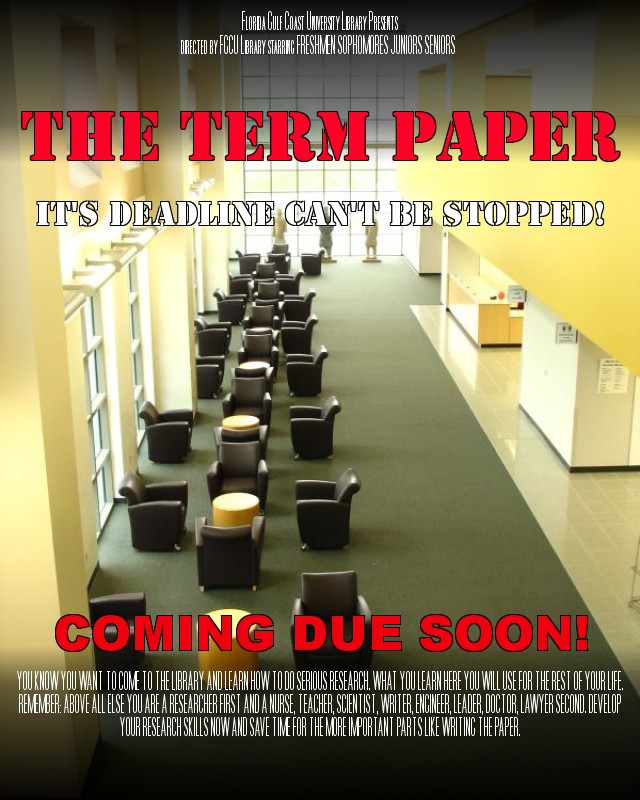
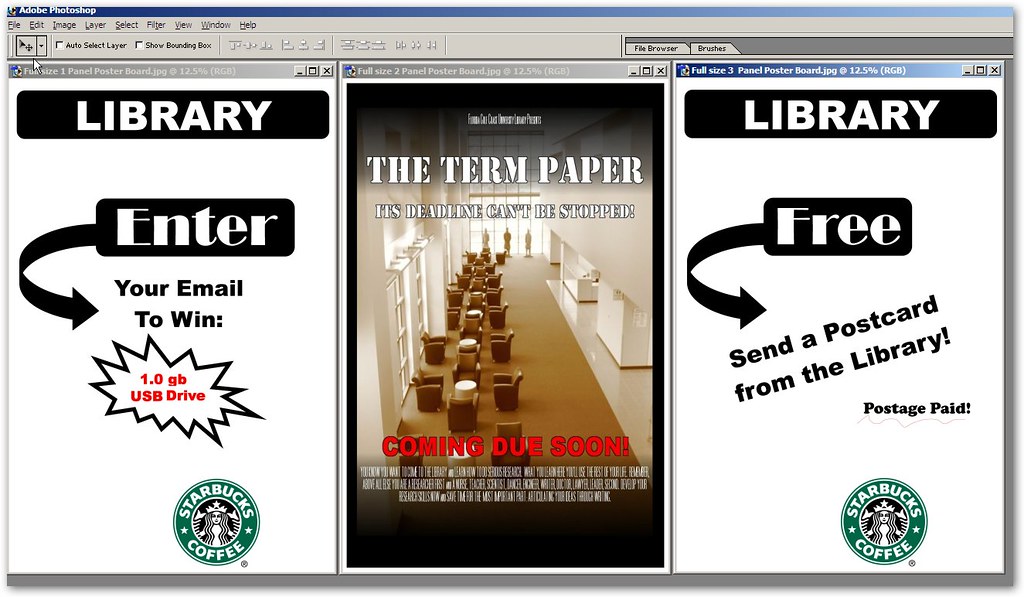
Part 2: So I made mistake on a poster for my library: why?


Its :P right on.

What's funny is that I had read this before I chose to start posting mistakes, warts, guffaws, errors, idiocies, bleeps, and all.

Rather than make sure my blog entries are perfect, pictures are perfect, code is perfect, grammar is perfect -I thought: why not just push to get more stuff out of my head and up on the web --share my thoughts --push my creative limits-- be less worried about getting it right and be more worried about getting it done.

"Below average" as a writer accurately describes my writing abilities. I only wrote my first paper (shudder when I call it that) in 1996. Yes, 1996. While 11 years have passed, consistent writing still escapes me. To feel I mastered what I should have learned from grade school & high school in the same time I'm supposed to be writing at the graduate level is a joke --on myself. I'm still learning some basics now.

While I write "for" the graduate level and do a pretty good job, most times it is an arduous struggle to produce a work I am proud of. I had not wrote a single paper in high school, did very little in depth writing in the military (mostly short, bulleted, tech reports.) In fact, the very first paper I wrote in college was, ...hold your breath... 3 pages! And I got a "C" on that paper.

Now it's years later and I realize I'm missing critical writing skills. But, I am slowly picking them up. Being years behind in the basics doesn't make it easy. Working hard to develop my writing I feel the thoughts/ideas in my head & the words I see don't even come close to articulating what I want to say. Then I make mistakes -oh that's just great.

Now you add the horror of people thinking you are less intelligent +your mistakes +lack of ability to articulate +desire to produce thought provoking quality writing +the fact that you don't know most people go through or have gone thru this process and it = performance anxiety, that is, until you face it. The research on reading & writing prove this true.


It's just funny that the week I push myself to experiment more, I get vociferous feedback, indirectly, on a minor mistake. (I shared it for comments to be sure.) Here I am trying: to publish more of my work, to grow professionally, to challenge myself by exposing more of my raw creative process. I post something and the first thing people do, while compliment it, is criticize it. Seems backhanded. I like being criticized; as long as I know it's coming. I'm not opposed to it at all and produce my best work, usually, only after someone totally shreds it.

When you think it's such a horrible error why not contact me directly like one poster on my flickr account did. I found that admirable. And indirect comments show that we have a tendency to do one thing first: find fault. I'm not crying over it. I'm not hurt or sad or remiss. Actually, it's emboldening. I'm quite distant from the happenings & only know about it indirectly.

What I am doing is using this as a writing exercise. There are a lot of reasons
but this helps. Sorry if you can't handle a wide swatch of language but: don't stomp on me because you are living in fear. I gave that up a long time ago. I wish to bring civility back, because it's not about the cell phone. I would like to see courtesy, respect, and dialogue, not discussion, rise.

Any and all mistakes are my own.

6.23.2007

What makes an e-book work?


1. Unlimited, concurrent electronic editions -but most vendors limit the number of users or the number of connections simultaneously

2. Most e-books are not important to users unless they are as easy to navigate as Amazon.com or O'reilly

3. What are electronic monographs and why do we insist on creating an air of superiority over our users by using words they don't know, don't care about and shouldn't have to be faced with?

4. e-Book and e-journal transactions (again why can't we say what people are really looking for... like articles and books) are about obtaining a piece of information from those document formats. Therefore they should be taggable, snaggable, citation-enabled/enhanced, hyperlinked, cross-ref'd, and full-text searchable and semantically categorized


5. Library users will discover e-Books through search engines. This is a fact. I've watched people actually type "your library's name and the name of the book they are looking for" -into a search box, in a search engine to find a book they need --or an article!

Why is it so hard for librarians to empathize? I'm starting to deeply comprehend why all the great masters are right ;) ...

6.13.2007

Is Wikipedia good enough?


can this be for real-1
Originally uploaded by iblee....

Recognizing that Wikipedia is "good enough" for the average user/patron/person/student/doctor/etc, stands as the most important point so-called information experts fail to accept. What!? How can we change this? We can't.

Why be so harsh on information experts?
i. Telling people you "know" what information holds the most truth is arrogant -and nearly impossible. While at times information can be verified, a solid open course of teaching information evaluation is better.

ii. We presume to tell people we know better than they do. Rather, we have just a few more years of driving on the open road that teaches us to be more cautious if even some of us learn that. We should teach healthy skepticism, coach, mentor, guide, lead when needed, . We should say: perhaps, consider other sources, look deeper, maybe, go further, don't take at face value, evaluate the legitimacy of everything, above all don't consume information like you're at McDonald's.

iii. Our new role is found working with people as the whole is smarter than the parts.

"How long long have you been driving? Are you an expert just because you've been driving a long time?"

What do most people do with information?
A. Most people don't evaluate information on the quality of the resource.
B. Most people evaluate information on its 1) usefulness to their immediate need in answering a question, 2) their desire to pursue their question further, 3) a decision-making framework based on prior knowledge, experience, and information.
C. Most people would listen to us if we first listened to them.
D. Really, we have a classic example here: librarians didn't create Google or wikipedia or ... and I think that burns most of the traditional information professionals;

Me, I'm informationally promiscuous & I represent how people pull together information for their needs. I will aggregate information as I go, fact-checking as I go, modifying as I go; I go deeper than some people -yes. Do others go deeper down into information trails than I do -yes.

Simply put, so much information is blindly accepted because:
1. we're too busy arguing on how important libraries & librarians are
2. we're too busy arguing the deeply hidden and arcane rules of OPACS, MARC, making research guides etc., --rather than illustrating Google scholar.
3. we're too busy responding to inaccurate observations. :)
4. we fail to accept the enormous hidden pressures people are under: lack of time, lack of care, lack of fluency...

Lesson:
Meredith's right. Think more like a person trying to get information, less like a guardian of the right information.

Rule:
Be steadfast by remaining open to changing your original belief as you evaluate the information you find. No text is infallible, not even the bible and the world is not flat.

Finally:
Anything taken out of context can be transformed.


6.01.2007

What is up!?


What is up!?

This is up: http://jott.com/

What a great idea. Thanks to http://twitter.com/teachandlearn
for the discovery.

It's June by the way.

5.12.2007

What won't change?


What won't change?
This is a great idea. Along with permanent innovation, we should see change as the metronome, chaos as the pace-setter, and relinquishment (you have no control save the control over one's self) as the cadence.

5.04.2007

What do you work between?


What do you work between?
Working between heartbeats is not how I'd go about things. Sometimes though my day goes by so fast and information becomes so compressed, we need to decompress and remember it's about the people. That and food: really good food-beer-wine-you know what I mean. Often, my pictures have nothing to do with what I am writing over here. Dr. Encomio, (a roomster as I have taken to naming the people who live with me) the guy in the back, has a picture of a bunny with a pancake on it's head taped to his faculty office door. Which reminds me; I need to take a picture of that. That's Megan in the front (current roomster) & Darlene (guest roomster) in the back.

5.02.2007

How should an online class be structured?


Question:

How should an online class be structured?

1. Group projects should be structured like this: do away with them. Do not allow them to be used by professors. Unless you can grade for individual effort, usually 1 or 2 of the group members do all of the work. Since I am a working professional, I do not need to develop a strong persistent work ethic. While some may need this skill, my time would be better spent applying new skills to problems posed in my classes rather than, for a lack of a better word, babysitting my group members who say things like:

  • I don't care. What do you guys want to do?
  • I don't know; just tell me what do do? I'm so confused; whatever you guys pick is fine.
  • Oh is there anything I need do; it's too much for me to figure out on my own and add something profound with critical thought and inquiry."
Again, I mean this constructively. I'm not flaming anyone here.

2. The first online class that any student should be allowed to take is a required, graded, informational course. This course would be an introductory lesson in how to find information from the disparate University information islands that are necessary for success online. It should not be group work and each person should be required to find the information on their own. It should teach one how to do what is expected from the professors. It should teach students the basic online search skills that some of my classmates do not possess. Sometimes we forget what it's like to use something for the first time and how confusing that is. What tasks could be in this class?
Everything from:
  • learning how to navigate deeply into the various, non-standard, hidden Blackboard sites the professors put up to
  • finding the right place to begin requesting an ILL to
  • getting your University ID to
  • paying for classes to
  • standardizing when assignments are due -rather than letting professors say, "Turn your assignment in on Tuesday @ 12:11 p.m." All assignments should have an end time that fits the rational of the assignment. If a professor in one class thinks I need a week to write a paper, then it should be due Sunday @ 6:00 pm; if a professor thinks I need to take a quiz which will take 30 minutes, then the quiz should start at 5:30 p.m. and end @ 6:00 p.m. This would go a long way to taking the randomness out of online learning.
  • pick what elements of Blackboard a professor can use; turn off the features that are redundant. Some professors send out announcements; some professors only announce on a discussion board. I shouldn't be forced to hunt down information or try to remember where each professor's peccadilloes are to be found. My time would be better spent digesting the assigned readings, applying the specific lessons I am being taught, and doing work that builds my skills as an information professional.
  • get rid of horde mail. It's horrible. Use gmail for schools.
  • create a wiki to capture students knowledge and make this part of the introductory class. Each incoming class is responsible for updating that wiki by checking to make sure the links, descriptive information, etc., is still accurate.
3. This type of class would greatly improve the online experience. From a distance student's perspective, there is a voluminous amount of information that one is expected to know seemingly by inference. Imagine standing in the Library of Congress and by your glance I'm supposed to understand (guess) which section of books to go to.

4. There are some fantastic online technologies that allow immersion into a live video, chat, file sharing, voip environment that doesn't run on clunky java and could really peel back the veil for students who don't understand how dynamic and engaging online learning can be. Online classes can be just as "physical" as a physical class -the only difference is your sitting in Tallahassee and I'm in Ft Myers.

There's always improvements to be made.

4.26.2007

Is everyone going online to get information?


Question:
Is everyone going online to get information?

You should also check out the practically-real-time wikipedia entry on the VA Tech massacre. The entry is a great display of human beings not only as information consumers but as information agents actively creating and sharing information at an astonishing pace seeking to understand (my implied-ness.)

http://en.wikipedia.org/wiki/Cho_Seung-Hui

oh there I go again recommending wikipedia. ;)

and this is pretty cool too!

4.14.2007

Did we ask this question already?

Question:
"Nanosecond Timing Synchronization" means that time is still big, big business.
That's fine by me. Most people are going to say at the end of their life: I'm glad I didn't spend more time at the office. Problem: most people hate their job; what if you don't and live a reticulated-pythonic life?

What's the 411 homey?


Question: What's the 411?

This is.